Traditional Chinese Lanterns: The Art of "Inner Glow" and Modern Craft
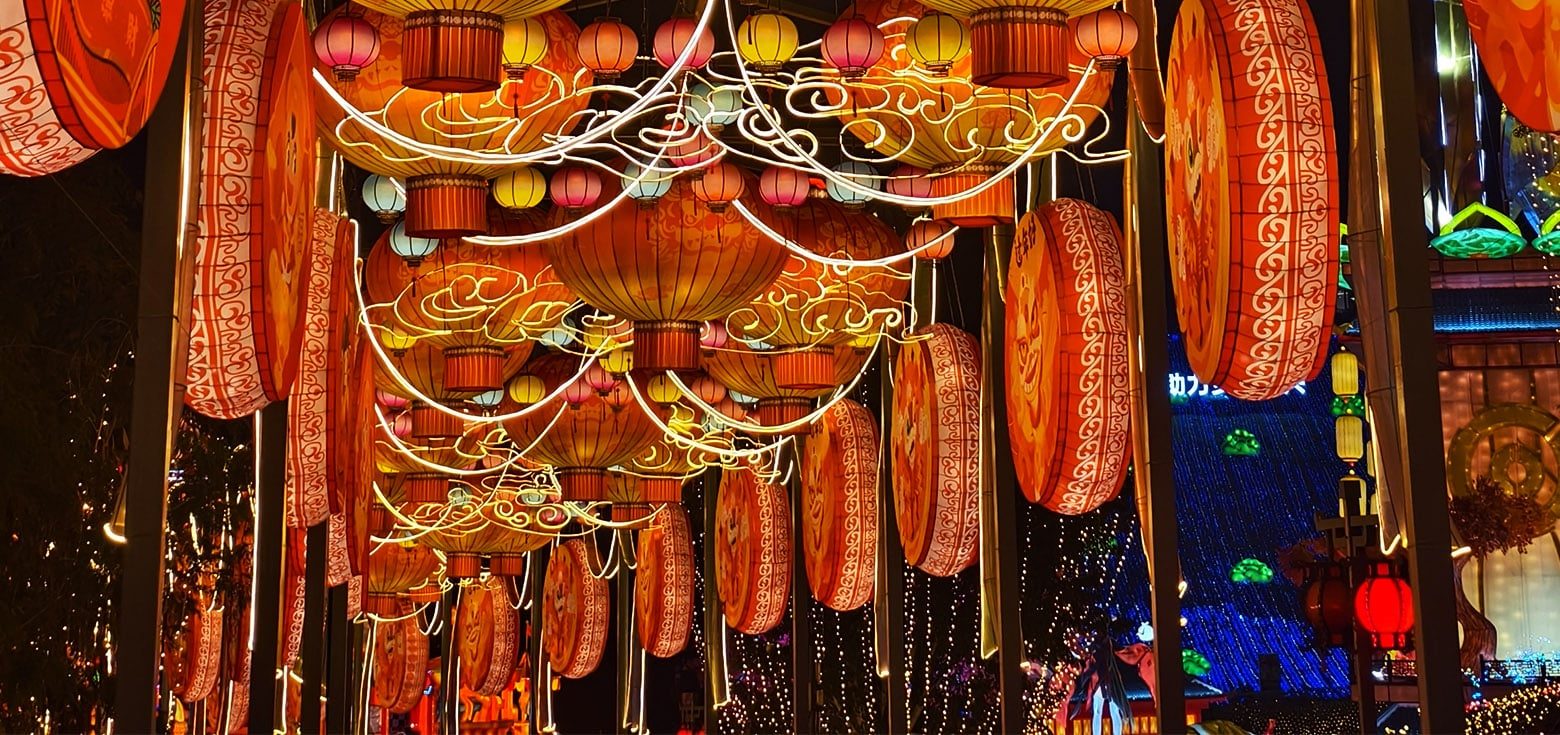
In the bustling streets of modern cities, neon signs and LED screens fight for our attention. Yet, amidst this visual noise, traditional Chinese lanterns command attention in a completely different way: through silence, warmth, and depth.
For over two thousand years, the Chinese lantern has been the defining symbol of Oriental aesthetics. But for us at FOREST PAINTING LANTERN, these are more than cultural symbols; they are intricate engineering challenges. How do we preserve the delicate soul of a traditional chinese paper lantern while making it strong enough to withstand a coastal typhoon? This article goes beyond history to explore the manufacturing secrets that define authentic Chinese traditional lanterns today.
The Aesthetics of "Inner Glow" (Why Material Matters)
The most common mistake in modern manufacturing is treating the traditional Chinese lantern merely as a “light bulb cover.” True craftsmanship is about the interaction between light and fabric.
VS Modern Plastics (PVC & Acrylic): In the market, you will often see lanterns made of PVC or Acrylic. While durable, these materials are “cold.” PVC creates a harsh, plastic reflection that looks cheap under direct light. Acrylic, while clear, blocks the soft diffusion of light, making the lantern look like a rigid industrial signage box rather than a piece of art.
The Superiority of Satin & Silk: To capture the authentic soul of a traditional Chinese paper lantern without the fragility, we utilize high-density Satin or Thickened Silk. Unlike hard plastics, these fabrics possess a natural weave texture.
The “Inner Glow” Effect: When the internal light source (strictly controlled at 3000K Warm White) hits the silk, the fabric doesn’t just block or transmit light—it glows. It creates a “soft focus” effect known as “Inner Glow” (内透光), providing a warmth and depth that PVC can never achieve.
Decoding 3 Types of Chinese Traditional Lanterns
While modern technology allows for the infinite variety seen in general Chinese Lanterns, traditional Chinese lanterns adhere to specific structural languages that have evolved over centuries. We do not simply “manufacture” them; we reconstruct their historical elegance using authentic industrial materials.
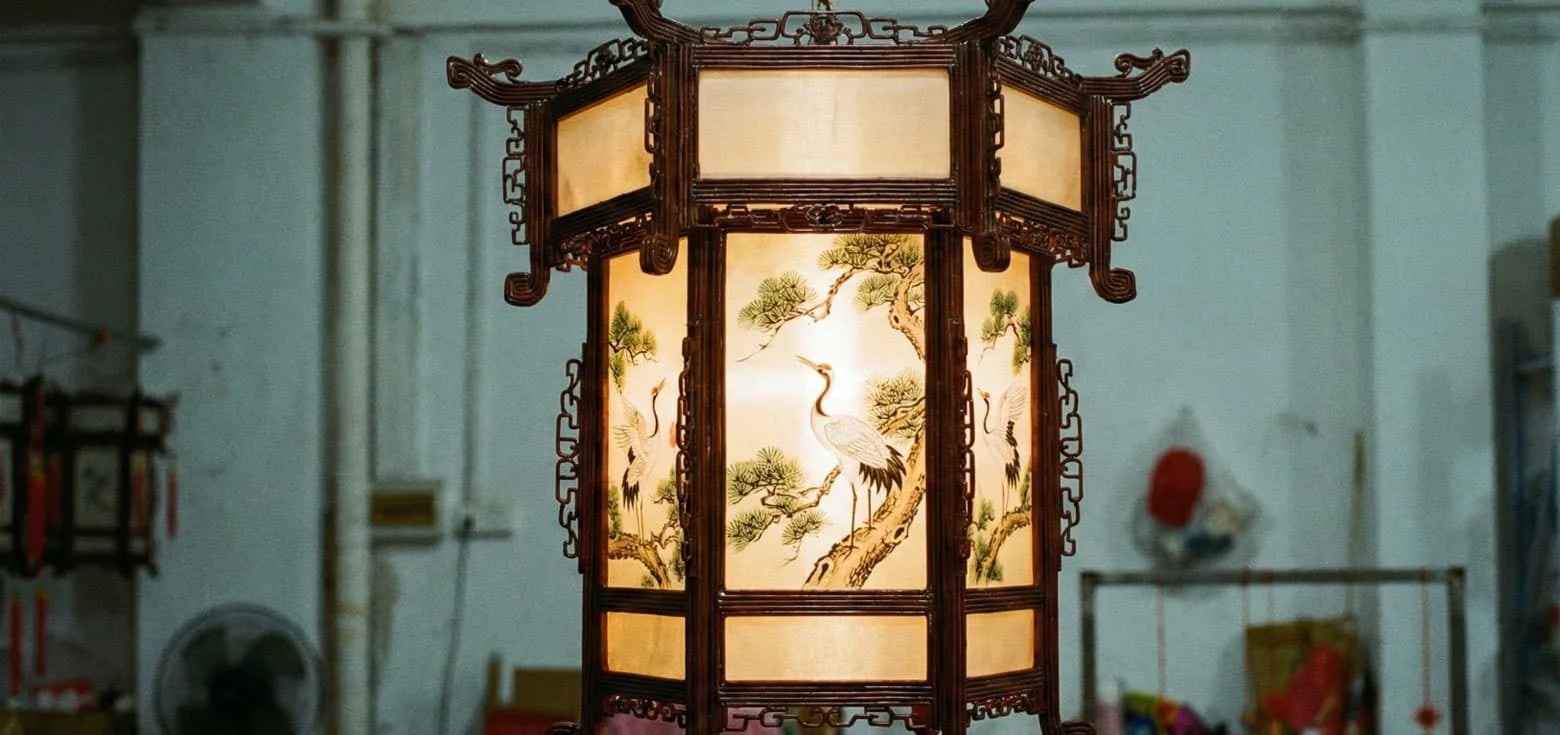
1. The Palace Lantern:The Complexity of "Liufang"
Historically reserved for imperial courts, the Palace Lantern is the ultimate test of structure.
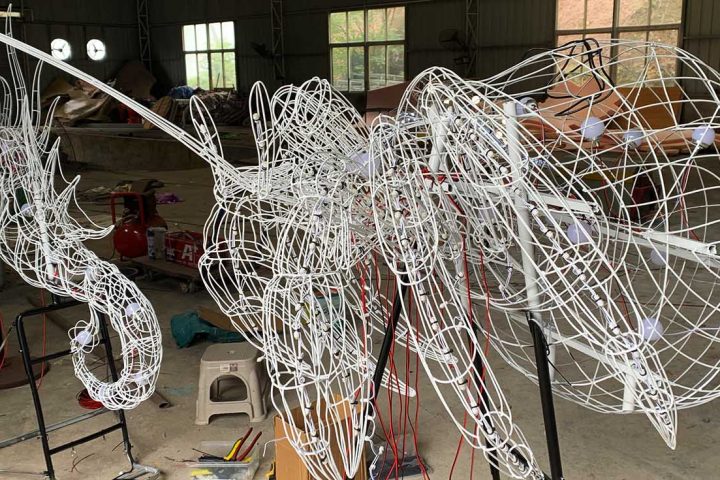
Our Craft: Unlike factories that rely on brittle plastic frames, we hand-weld our skeletons using Galvanized Iron Wire (approx. 2.8mm – 4.0mm), a material chosen for its perfect balance of malleability and rigidity. Our welders must ensure absolute precision in every angle—for instance, a hexagon’s corners must be exactly 120°—to guarantee the lantern hangs perfectly straight.
The Art: The panels are not printed. We employ artists to hand-paint “Gongbi” style motifs (meticulous brushwork) of cranes, pine trees, or landscapes directly onto the silk, turning each lantern into a glowing gallery.
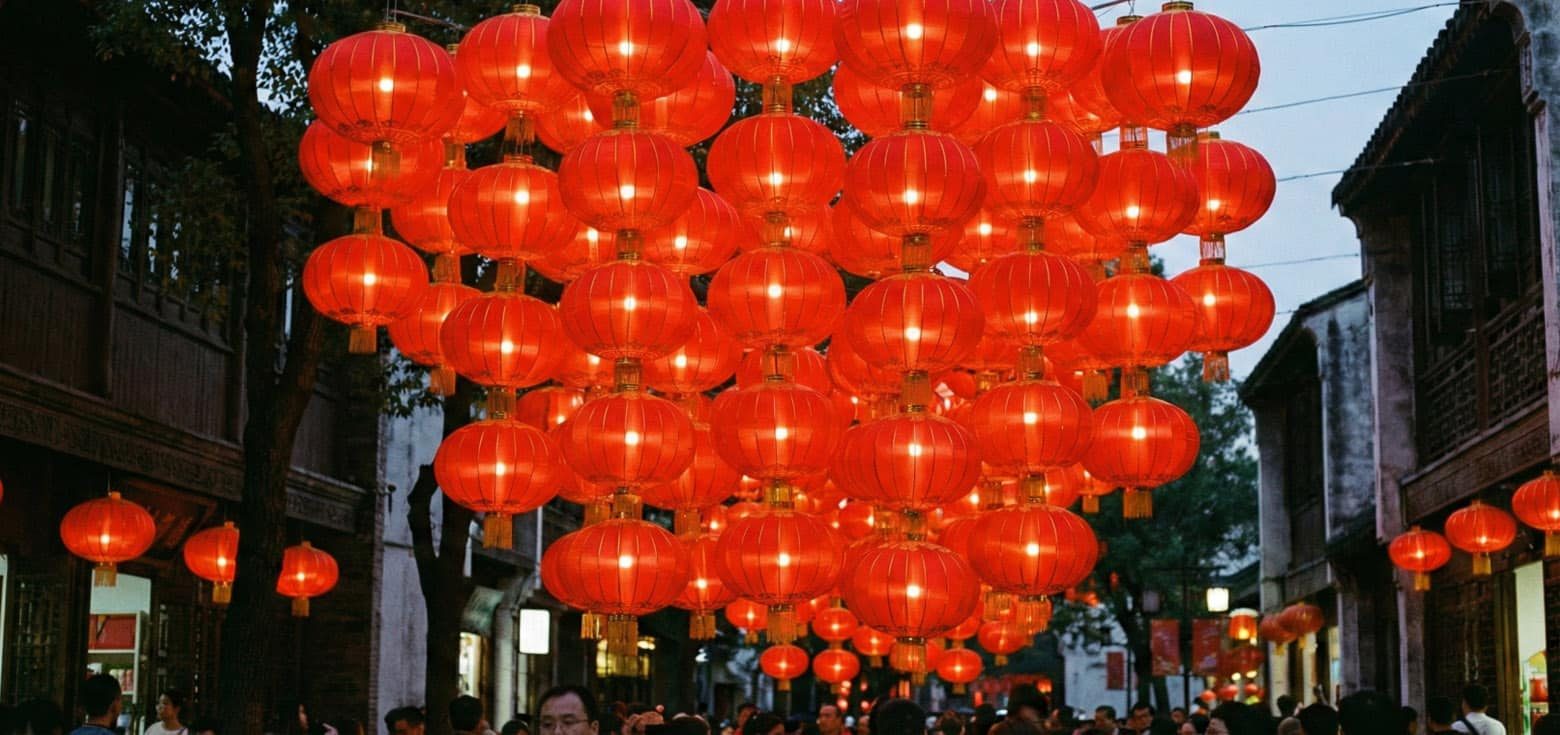
2. The Red Gauze Lantern:The Challenge of the "Perfect Sphere"
This is the archetype of Chinese traditional lanterns. It may look simple, but maintaining a perfect shape is notoriously difficult.
The Skeleton Density: Cheap lanterns often use thin, sparse wires, causing the fabric to sag and resulting in a ‘starved’ appearance. We double the density of our Galvanized Iron Wire skeleton to firmly support the fabric, creating a full, robust spherical shape that truly embodies ‘Tuanyuan’ (Reunion).
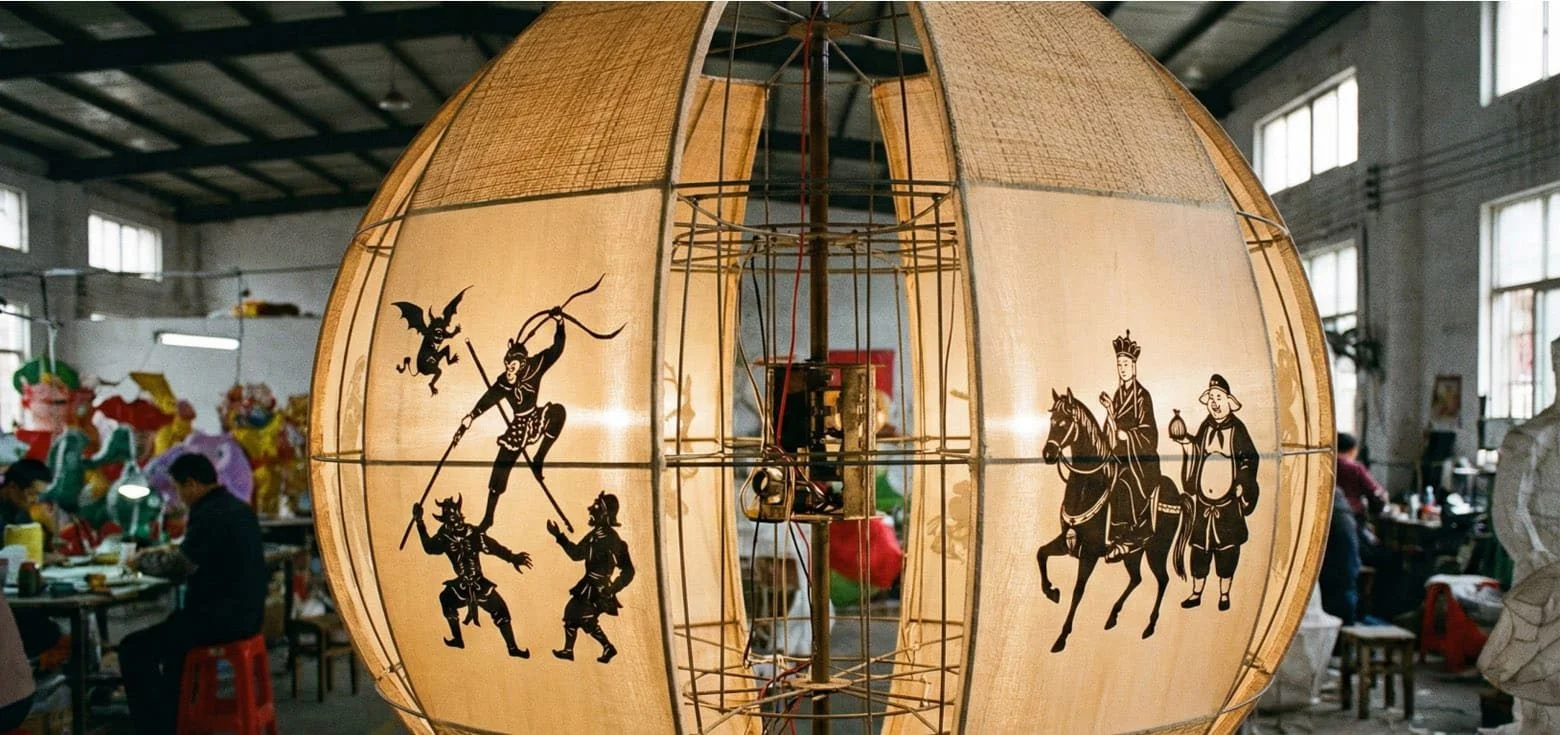
3. The Rotating Lantern:The Ancient Animation
Known as the “Trotting Horse Lamp,” this was the world’s earliest animation device.
The Shadow Play: The magic lies in the dual-layer design. The inner layer rotates with paper cutouts (often telling a story like “Journey to the West”), casting moving silhouettes onto the static outer silk screen. It creates a mesmerizing, cinematic experience that static traditional Chinese lanterns cannot match.
Invisible Engineering: Making Tradition Last
The biggest concern for international clients is durability. A visually authentic traditional Chinese lantern must also be an engineering marvel.
Rust Prevention: We utilize Galvanized Iron Wire as our base material. Unlike raw steel or bamboo found in generic traditional Chinese paper lanterns, the galvanization process provides a zinc coating that actively resists corrosion. Furthermore, once the skeleton is complete, we apply an additional layer of anti-rust primer to the entire frame.
Expert Tips for Selecting Traditional Lanterns
If you are planning a lantern project, here are three signs of quality craft to look for:
Bridging the Past and Future
The traditional Chinese lantern is a bridge. On one side, it holds the memories of 5,000 years of civilization; on the other, it embraces modern industrial standards.
By respecting the aesthetics of the past while innovating the engineering behind it, FOREST PAINTING LANTERN ensures that traditional Chinese lanterns remain stunning, durable centerpieces for modern venues worldwide.