


The History of the Mid-Autumn Festival and Its Enchanting Stories
- ForestPainting

As one of China’s most important traditional festivals, its profound cultural background and moving tales have always captivated people at home and abroad. The history of the Mid-Autumn Festival runs deep; the origin of the Mid-Autumn Festival can be traced back over three thousand years to ancient moon worship rituals, and Mid-Autumn Festival stories are known in every household. For foreign friends wishing to understand Chinese culture, grasping the festival’s development and the legends of the Mid-Autumn Festival is key to understanding the Chinese people’s deep connection to the moon.which is beautifully brought to life today through spectacular Mid-Autumn Festival lanterns.
This article will use accessible language to present the complete development of the festival and its lunar mythology.
The History and Evolution of the Mid-Autumn Festival
The festival did not begin in a single dynasty but underwent a long evolutionary process. Its roots are closely tied to ancient moon worship, evolving from an official sacrificial ritual into a nationwide celebration of reunion. To truly understand the history of the Mid-Autumn Festival, we must trace it back to the Zhou Dynasty.
1. The Zhou Dynasty: The Dawn of Moon Worship Rituals
The origin of the Mid-Autumn Festival can be traced back to the Zhou Dynasty. In that agricultural society, people revered natural phenomena; the moon’s phases directly affected tides, climate, and farming, making moon deity worship a vital belief. The Zhou emperor, acting as the ultimate ruler and communicator between heaven and humanity, held specific rituals—worshipping the sun in spring and the moon in autumn.
Initially, moon worship occurred on the “Autumn Equinox,” a day of equal daylight and nighttime representing perfect Yin-Yang balance to the ancients, making it ideal for paying respects to the moon deity. However, this equinox falls around September 22nd on the Gregorian calendar, meaning the lunar date isn’t fixed and the moon might not be full. Since the Chinese deeply value completeness, worshipping on a night without a full moon felt lacking. Consequently, the time of moon worship gradually shifted to the 15th day of the 8th lunar month, when a perfectly round and bright moon is virtually guaranteed.
This serves as the early background for the origin of the Mid-Autumn Festival. Although the name “Mid-Autumn Festival” didn’t exist yet, the link between the 8th lunar month’s 15th day and moon worship was established, laying the groundwork for the future history of the Mid-Autumn Festival.

2. The Han Dynasty: Folk Customs and the Embryonic Myth
By the Han Dynasty, the festival’s history entered a new phase with increasing folk activities on this day. Agricultural texts from the time record a tradition of gifting coarse grain and jujube cakes to elders. Though simple and lacking fillings or exquisite molds, their round shape already implied reunion and completeness, serving as the prototype for later mooncakes.
More importantly, the Han Dynasty was a crucial period for the development of legends of the Mid-Autumn Festival. The tale of Chang’e flying to the moon was largely formed during the Western Han period, turning the moon from a cold celestial body into a beautiful woman’s warm, storied residence. These Mid-Autumn Festival stories were continuously enriched and beautified over time, becoming an indispensable cultural soul of the festival.
3. The Tang Dynasty: Naming the Festival and Nationwide Moon Gazing
The Tang Dynasty, an era of high cultural openness and prosperity, marked a critical turning point in the history of the Mid-Autumn Festival. Historical records show that Emperor Taizong officially decreed the 15th day of the 8th lunar month as the “Mid-Autumn Festival,” marking the first time the name appeared as a statutory holiday.
The core activity in the Tang Dynasty was moon gazing. Rather than the solemn Zhou rituals, Tang people used the day to enjoy beautiful moments and express their emotions. Emperors hosted banquets in the palace, ministers wrote poetry while drinking, and commoners gathered in scenic courtyards or by rivers to drink and admire the moon. Zhang Jiuling’s famous poetic line, “As the bright moon shines over the sea, from far away you share this moment with me,” was written in this exact cultural atmosphere.
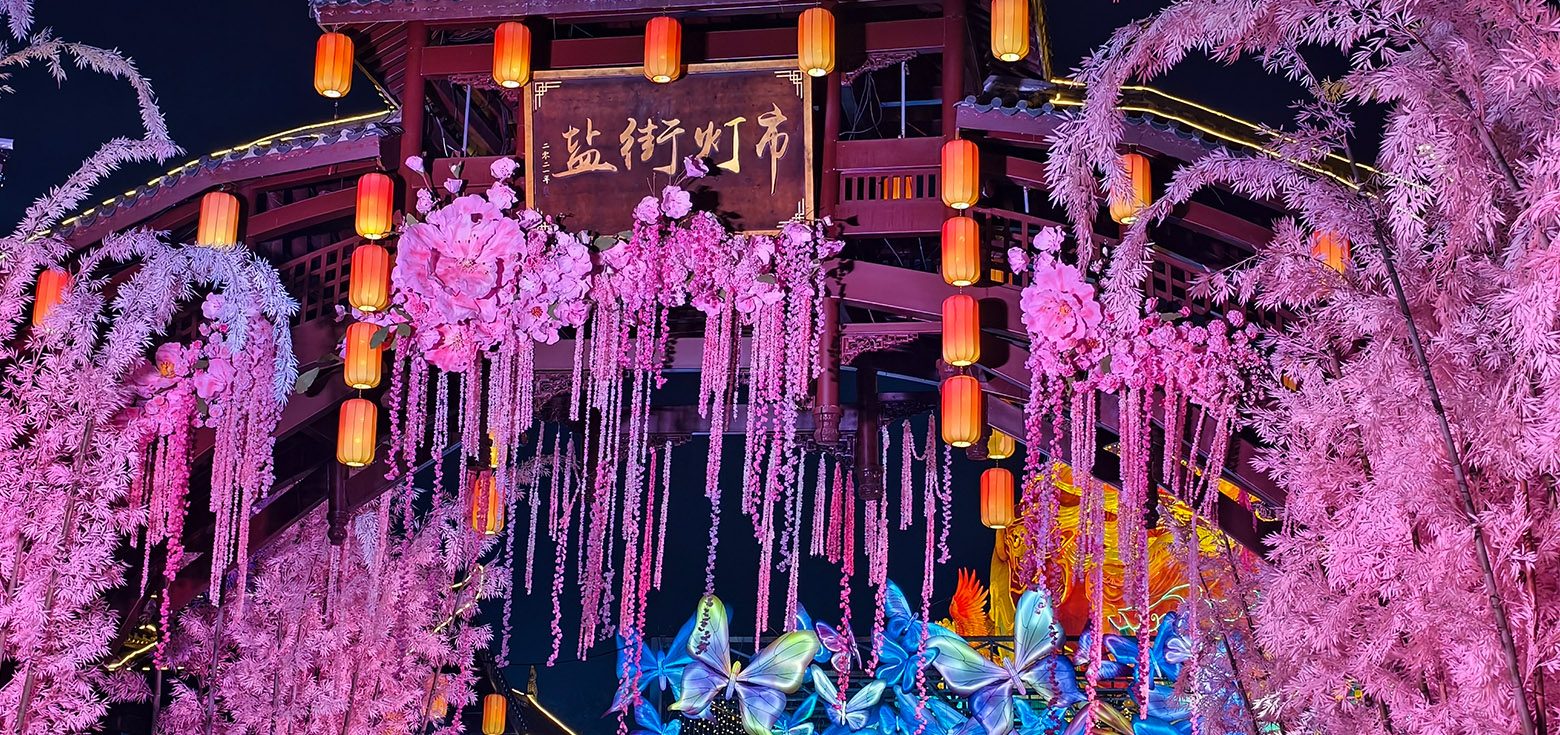
This era also saw the further spread and crystallization of legends of the Mid-Autumn Festival. Sketchbooks and novels recorded tales of Chang’e, Wu Gang, and the Jade Rabbit, alongside romantic rumors of Emperor Xuanzong dreaming of visiting the moon palace and secretly learning heavenly music. These Mid-Autumn Festival stories added a fantasy hue to the moon, providing endless creative inspiration for the breathtaking custom Mid-Autumn lantern designs that illuminate our modern celebrations.
4. Song to Ming and Qing Dynasties: Solidification of the Reunion Theme
During the Song Dynasty, a booming urban economy and the rise of the citizen class greatly accelerated the secularization of the festival. The Northern Song capital, Kaifeng, was bustling on Mid-Autumn night; wealthy families decorated their pavilions, ordinary citizens claimed spots in taverns and teahouses, and the brilliantly illuminated city echoed with music and laughter all night. Children were especially joyful, as they could play freely in the streets without curfew restrictions.
The specific name “mooncake” officially appeared in the Song Dynasty. The mooncakes then were quite similar to today’s versions, containing sweet fillings made of sugar and fat. Su Dongpo once praised them in a poem: “The small cake is like chewing the moon, containing crispness and sweetness within.”.
By the Ming and Qing Dynasties, the Mid-Autumn Festival was firmly established as one of China’s most important traditional holidays, rivaling the Spring Festival in status, with “reunion” as its core theme. Folklore records from Beijing in the Ming Dynasty note that mooncakes and fruits for moon worship had to be cut into portions matching the number of family members; even if a member was away, a specific portion had to be reserved for them. This detail fully illustrates the deep underlying meaning of the history of the Mid-Autumn Festival—no matter where one is, the hearts of family members are tightly linked by the very same moon.
Legends of the Mid-Autumn Festival: Three "Permanent Residents" of the Moon Palace
Every traditional holiday has its moving tales, and the legends of the Mid-Autumn Festival are particularly rich and colorful. These Mid-Autumn Festival stories transformed the celestial moon into a magical realm inhabited by a fairy, an osmanthus tree, and a jade rabbit. The following three stories form the core content of the holiday’s culture.
1. Chang'e Flying to the Moon: A Tale of Love, Choice, and Eternity
Chang’e flying to the moon is the most famous of all Mid-Autumn Festival stories. Circulated for thousands of years with multiple versions, the most well-known goes like this:
Long ago, ten suns appeared in the sky simultaneously, scorching the earth, destroying crops, and causing immense suffering. A divine archer named Hou Yi bravely stepped forward, climbed Mount Kunlun, and shot down nine suns, leaving only one to provide light and heat. He thereby became a great hero, earning the profound respect of people everywhere.
To commend his deeds, the Queen Mother of the West bestowed upon Hou Yi a packet of elixir capable of granting immortality. Deeply in love with his wife, Chang’e, Hou Yi did not wish to become immortal alone, so he gave her the elixir for safekeeping until they could find an opportunity to share it.
However, his wicked apprentice Pang Meng secretly coveted the elixir. Feigning illness to skip a hunting trip, Pang Meng burst into Chang’e’s room and forced her to hand over the potion. Knowing she was outmatched, Chang’e opened the packet and swallowed all of the elixir in desperation.
Instantly, her body became weightless; she floated out the window and drifted up into the sky. Her heart still longed for her husband, so she chose to land on the moon—the celestial body closest to Earth—and took up residence in the Guanghan Palace.
Upon returning home and learning what had happened on that 15th day of the 8th lunar month, Hou Yi was absolutely heartbroken. He laid out Chang’e’s favorite foods in the courtyard and called out her name toward the moon. Touched by their profound affection, the people also began setting out offerings on this day to pray for family happiness and harmony, forming the origin of this classic legend of the Mid-Autumn Festival.

2. The Jade Rabbit Pounding Medicine: A Tale of Kindness and Sacrifice
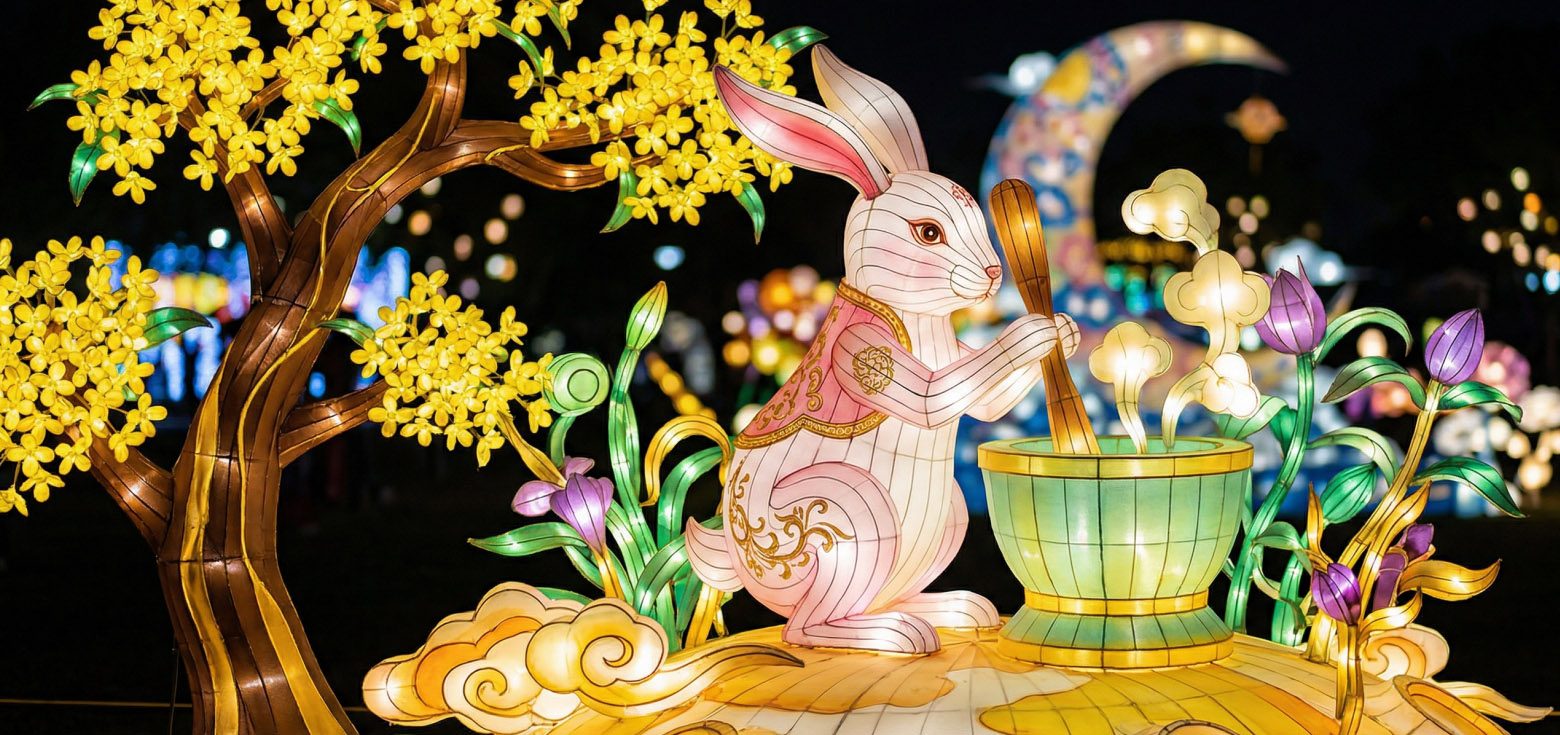
If you carefully observe the full moon’s surface, you will notice dark, shaded regions. The Chinese do not see a “man in the moon,” but rather the silhouette of a rabbit holding a jade pestle, focused entirely on pounding medicine. This is the Jade Rabbit from the legends of the Mid-Autumn Festival.
There are two primary explanations for why it resides on the moon.
The first stems from Taoist mythology, claiming the Jade Rabbit was a divine beast of the Queen Mother of the West tasked with refining the elixir of immortality. After Chang’e ascended, the Queen Mother dispatched the Jade Rabbit to the moon to accompany her and continue its medicine-pounding duties.
The second originates from a Buddhist tale. Three deities transformed into starving old men and begged for food from a fox, a monkey, and a rabbit. The fox and monkey found food, but the rabbit found absolutely nothing. Feeling immense shame, the rabbit offered its own body to nourish the elders and leaped into the blazing fire. Profoundly moved by its pure kindness and self-sacrifice, the deities sent the rabbit to the moon to eternally enjoy the admiration of the people.
Regardless of the version, this Mid-Autumn Festival story expresses deep praise for kindness, loyalty, and selfless dedication. Today, the Jade Rabbit has evolved into one of the most adorable and beloved cultural symbols of the holiday.
3. Wu Gang Chopping the Osmanthus Tree: A Tale of Punishment and Perseverance
Beside the Guanghan Palace on the moon grows a gigantic osmanthus tree with a stout trunk and lush branches, reaching a height of five hundred zhang. Beneath it stands a man swinging an axe day after day, but every time the axe is pulled away, the wound on the tree instantly heals as if never cut. This man is Wu Gang, the second protagonist in the legends of the Mid-Autumn Festival.
Originally an ordinary mortal from the Xihe region seeking eternal life, Wu Gang severely lacked perseverance. His cultivation was sporadic, and he constantly complained about the hardship. The Heavenly Emperor determined his will required tempering and punished him by sending him to the moon to chop down the tree, promising, “Once this osmanthus tree is chopped down by you, you may become an immortal.”.
Wu Gang didn’t expect the tree’s magical healing abilities. Thousands of years have passed, and the tree still stands tall while Wu Gang ceaselessly swings his axe. While seemingly cruel, this Mid-Autumn Festival story carries a profound meaning: it is precisely because of his relentless chopping that the osmanthus tree blooms with fragrant flowers year after year. Thus, people drink osmanthus wine and enjoy osmanthus cake during the festival, expressing gratitude for the fragrance brought by this eternal tree.

Cultural Echoes Under the Moonlight
Over its three-thousand-year span, the history of the Mid-Autumn Festival evolved from solemn official moon-worship ceremonies in the Zhou Dynasty to romantic poetry gatherings in the Tang Dynasty, and finally to today’s cherished reunion holiday for global Chinese, yet its core spirit remains eternally unchanged.
The legends of the Mid-Autumn Festival impart enduring truths about love, sacrifice, perseverance, and dedication. Whether it is Chang’e ascending alone to protect the elixir, Wu Gang tempering his will through endless labor, or the Jade Rabbit showcasing the greatest kindness through its tiny stature, these Mid-Autumn Festival stories are far more than ancient myths. They carry values passed down by the Chinese people from generation to generation, serving as the most precious spiritual wealth left by the history of the Mid-Autumn Festival.
As a lantern company located in Zigong, Sichuan, China, we consistently draw creative inspiration from the history of the Mid-Autumn Festival and the legends of the Mid-Autumn Festival when designing themed lanterns. Zigong is known as the “Lantern City of China,” and the Zigong lantern-making technique is a national intangible cultural heritage. In our artworks, themes like the moon palace fairyland, Chang’e and the Jade Rabbit, and fragrant osmanthus are repeatedly highlighted; this serves as our heartfelt tribute to the history of the Mid-Autumn Festival and Mid-Autumn Festival stories, as well as our unique way of sharing Chinese culture with the world.
When yet another bright Mid-Autumn moon rises, may this ancient history of the Mid-Autumn Festival and its deeply moving legends continue to flow within the hearts of everyone who gazes up at the starry sky.