


Christmas Made in China: Yiwu's Assembly Lines and Zigong's Lanterns
- ForestPainting
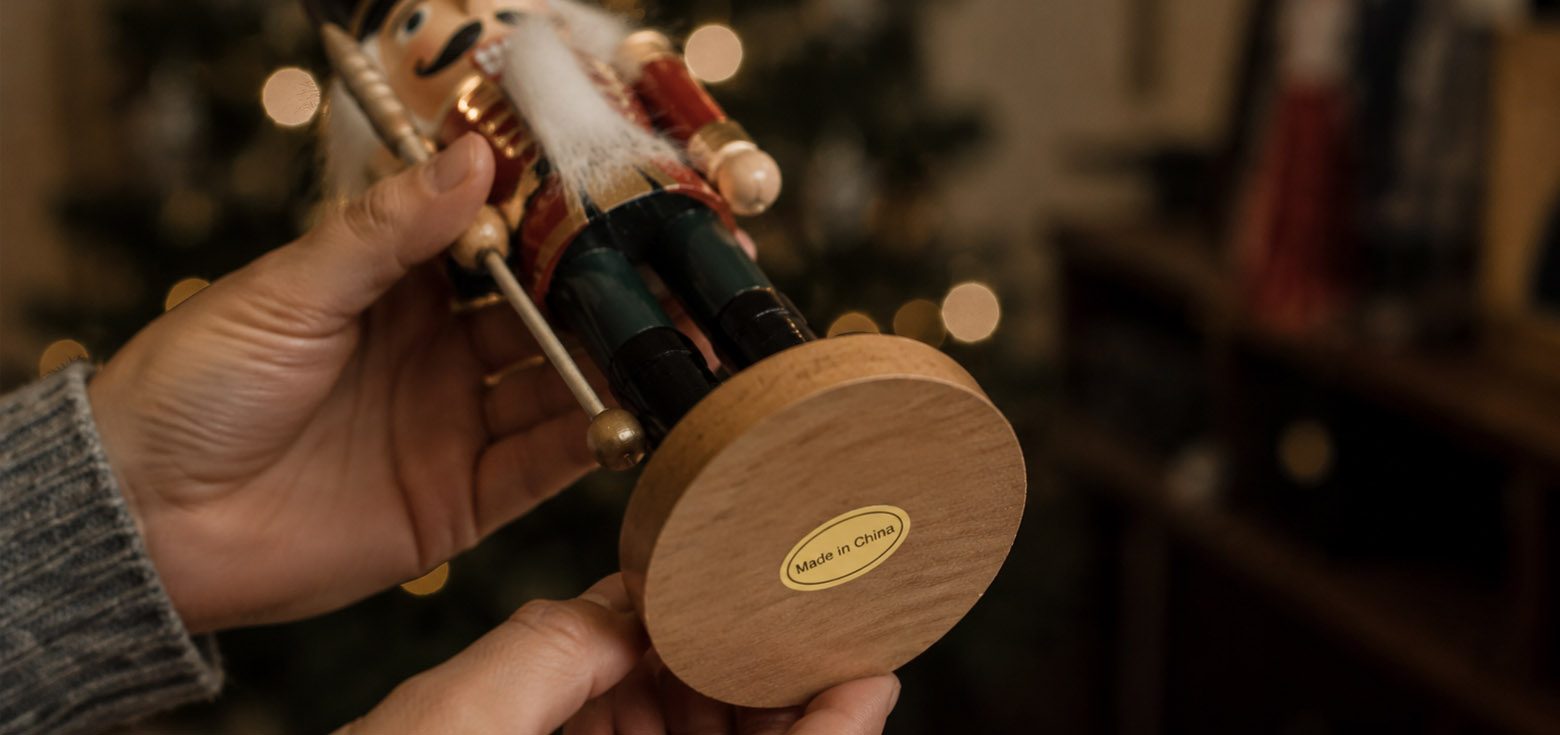
When mentioning Christmas Made in China, most people picture massive shipping containers and standardized, inexpensive goods. Yet, every December, as the lights on London’s Oxford Street turn on and the Christmas tree at New York’s Rockefeller Center is illuminated, the reality behind these grand festive holiday lighting traditions involves an Eastern supply chain far more complex than imagined.
Behind the scenes of Christmas, two entirely different logics are at work: the assembly lines of Yiwu Christmas factories and the handcrafted lantern sets of Zigong. They serve different tiers of the holiday—one fills family Christmas trees, while the other lights up city squares.
Yiwu Christmas factories: The Global Hub
Scale and Data
Yiwu is a city without a single naturally growing Christmas tree, yet it serves as the world’s largest distribution center for holiday supplies. In 2025, Yiwu’s export volume of Christmas products reached 5.65 billion RMB, a 17% year-on-year increase. In the first half of the year alone, exports hit 1.78 billion RMB (up 54.2% YoY), climbing to 5.17 billion RMB by the third quarter.
Roughly eight out of every ten ornaments on Christmas trees worldwide originate from Yiwu. Each year, the city exports over 20,000 categories of holiday goods to more than 100 countries and regions. The approximately 600 Yiwu Christmas factories dedicated exclusively to festive products form the foundational backdrop of Christmas Made in China.

Production Model
The logic in Yiwu is straightforward: Christmas is a demand that can be standardized and mass-produced. A single mold can press out a hundred thousand identical Santa Clauses, and one production line can manufacture tens of thousands of meters of identical string lights. What it produces is not a “piece of art,” but a “batch of goods.”
The shipping schedule advances every year. By April 2025, Christmas supplies had already appeared in Yiwu’s export containers. It is an industrial rhythm that begins shipping in April and lasts through November, covering more than half the year.

Facing Bottlenecks
When the factory price of a Christmas bauble is squeezed to just a few cents, only extreme scale and efficiency can ensure survival. Although Yiwu’s export volume continued to grow in 2025, gross profit margins did not rise concurrently.
Yiwu hosts 13,385 foreign trade enterprises with actual import and export records. The competition is incredibly fierce, with every cent of profit repeatedly squeezed. The Christmas baubles made in Yiwu can be replaced by factories in Vietnam or Indonesia—it lacks irreplaceability, possessing only an economy of scale.
Zigong: The Logic of Custom Christmas lanterns
Scale and Data
Zigong is a small city in Sichuan, located 1,600 kilometers away from Yiwu. It is home to over 1,000 lantern enterprises, capturing a 92% share of the international lantern exhibition market, with footprints in more than 80 countries and regions.
In 2024, Zigong lantern companies executed 104 overseas projects, achieving cultural exports exceeding $77 million. In the first half of 2025, these enterprises have already implemented 51 overseas projects. As of May 2025, Zigong has hosted 48 overseas lantern events in 47 cities across 13 countries, including the United States, France, and Italy.

Production Model
Zigong’s model is the exact opposite of Yiwu’s. Standing at the “Magical Winter Lights” festival in Houston, you can witness a set of Custom Christmas lanterns towering over 20 meters high. The underlying structure relies on precise steel armature modeling and advanced welder techniques, followed by meticulous silk-pasting over the surface. The entire installation is fabricated in sections by dozens of artisans and assembled on-site.
Its journey is much more complex. The design blueprints are finalized in Zigong, the steel armature is welded, and the fabrics are tailored locally. The components are then disassembled, packed into containers, shipped overseas, and finally reassembled on location over several weeks.
In October 2025, a China-Europe freight train loaded with Zigong lanterns departed from the Chengdu International Railway Port, heading for St. Petersburg, Russia. Through multiple logistical channels like the China-Europe railway and ocean freight, Zigong lanterns are entering the Christmas season of an increasing number of overseas cities.

Zigong's Bottlenecks
The operational cycle for an overseas lantern project typically spans three to six months, involving cross-lingual communication, transnational logistics, and construction under varying international safety standards. A single mistake at any stage could delay the entire project—and missing the Christmas season means missing the entire year.
However, Zigong possesses an advantage Yiwu lacks: irreplaceability. While Yiwu’s Christmas baubles can be substituted by Vietnam, Zigong’s lantern craftsmanship—encompassing steel armature modeling, color-separated silk pasting, and specialized welder techniques—currently has no comparable alternative production hub globally.

The Essential Difference Between the Two Paths
Yiwu manufactures the “props” of Christmas: small items that fill the family Christmas tree—cheap, abundant, and disposable, satisfying the massive demand of countless households for indoor Christmas lighting. Conversely, Zigong manufactures the “scenes” of Christmas: Custom Christmas lanterns that dominate city squares—expensive, slowly crafted, and existing for specific occasions.
Of the global total export value for Christmas decorations, China firmly holds the top position at $5.9 billion, accounting for over 90% of the world’s share. The vast majority of this stems from Yiwu’s assembly lines, while Zigong contributes the “irreplaceable” visual spectacles.
How Does Zigong Tell Western Stories?
Zigong artisans have previously transformed Biblical tales and Shakespearean plays into elaborate lantern installations. For the Swan Lake light exhibition at the Sydney Opera House in 2024, they utilized steel wire armatures combined with digital LED strips. A craft originating from the East is now seamlessly narrating stories of the West.
A specific lantern set exists solely for one plaza in one city—illuminated for two months, dismantled, and replaced the next year. Zigong’s creations are not meant to be “owned”; they exist to be “viewed.”

Who is Truly Lighting Up the Christmas Night?
Christmas is regarded by many as a “Western tradition,” yet its material foundation—the objects that illuminate the streets and decorate homes—largely bears the hallmark of Christmas Made in China. The factory workers in Yiwu do not know which country’s tree their ornaments will eventually hang on, just as the artisans in Zigong may not know exactly which park in Houston hosts their lantern set.
In 2024, the export tax rebates for lantern enterprises in Zigong’s Da’an District alone reached 2.626 million RMB—a testament that numerous small and medium-sized enterprises are genuinely participating in this supply chain Behind the scenes of Christmas. They are not publicly listed companies and have zero brand exposure, but they are an indispensable link in this chain.
When you walk into a city square awash with lights on a December night, the starting point of that illumination is often not in Europe or North America, but in two small cities in China’s Zhejiang and Sichuan provinces.