Custom Illuminated Structures: Engineering Flawless IP Accuracy
When global brands commission custom illuminated structures, visual distortion is unacceptable. As a core pillar of our commercial light displays, we operate exclusively as a build-to-order fabrication facility. By rejecting prefabricated modifications, our precision engineering protocols guarantee your complex 2D IP is translated into a flawless 3D glowing reality without compromising brand integrity.
The 4-Phase Protocol for Custom Light Sculptures
Phase 1: Digital Blueprinting & Feasibility Analysis
Before any steel is cut, our engineering team conducts a deep dive into your vector artwork. We utilize CAD software to translate flat designs into 3D structural models. During this phase, we map out the internal load-bearing skeleton separate from the aesthetic wireframe. This ensures that thick, structural steel pipes do not cast shadows across critical visual elements (like character faces or logos) once the internal LEDs are activated.
Phase 2: 1:1 Scale Floor Lofting
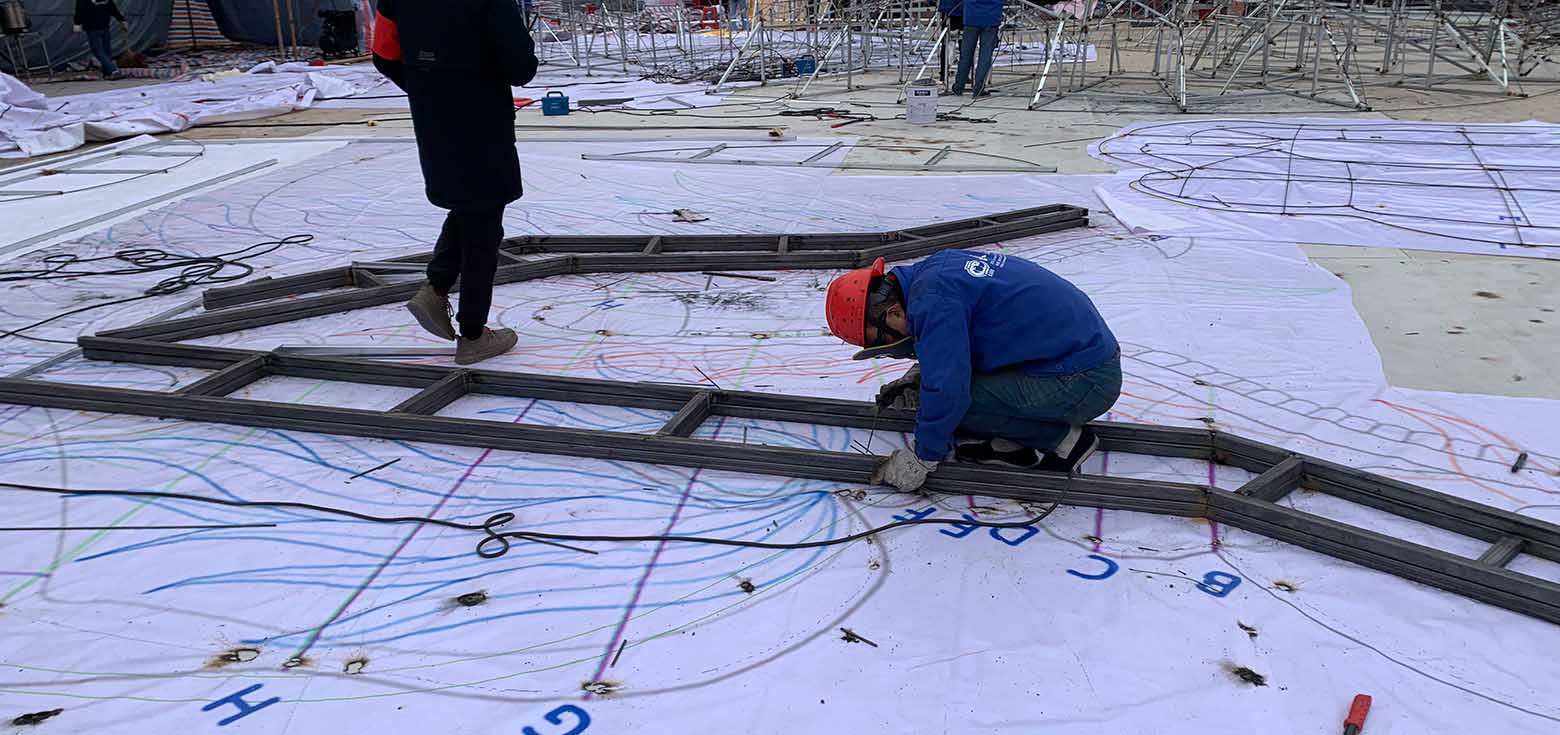
Computer models must be perfectly grounded in physical reality. We project and draft your approved blueprints directly onto our expansive factory floor at a true 1:1 scale. This massive physical lofting grid serves as the unalterable baseline for our welding teams. By continuously matching the steel bending to the 1:1 floor template, we eliminate the dimensional drift and proportion errors common in large-scale custom light sculptures.
Phase 3: Adaptive Armature & Wire-Shaping
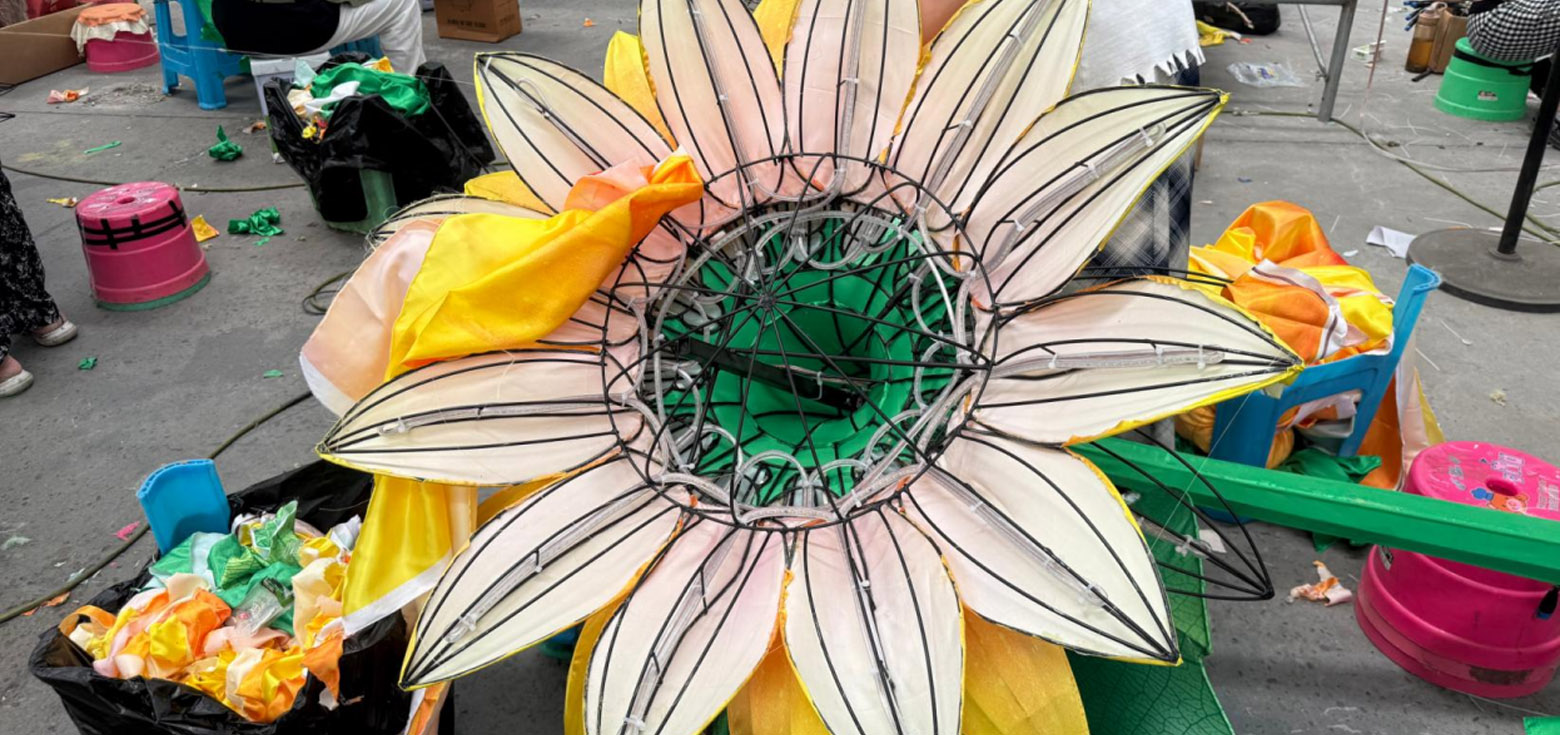
Structural fabrication adapts strictly to scale. For standard elements like flora or small figures, our artisans shape the entire form using pliable 8-to-14-gauge galvanized iron wire. However, massive installations towering several meters require a tiered approach: a heavy-duty steel pipe core for wind stability, 6-8mm round steel for the primary exterior volume, and fine galvanized wire exclusively for intricate details like facial expressions or typography. This targeted material use ensures both structural safety and flawless IP translation.
Phase 4: Chromatic Skinning & Day/Night QA Testing
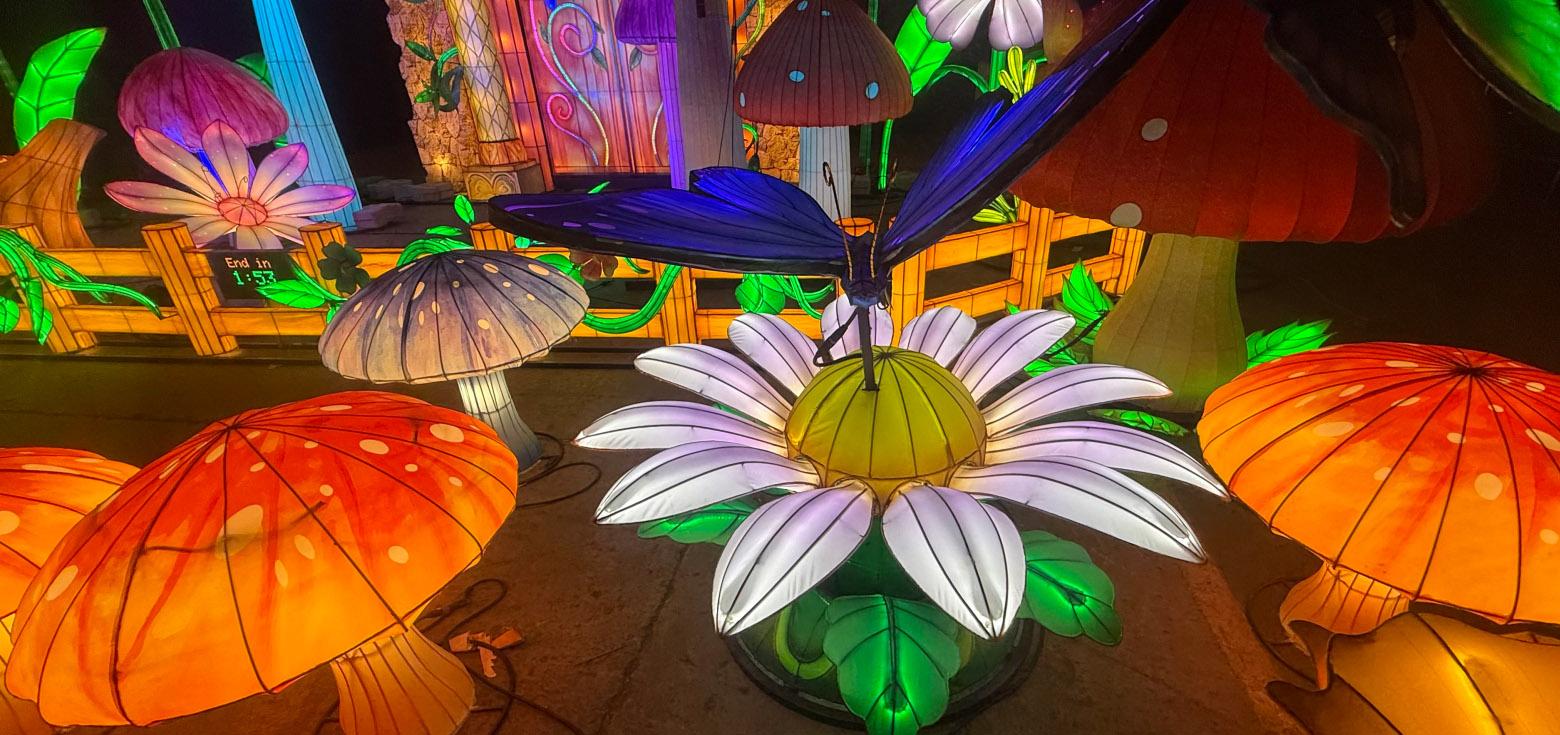
An IP character must look identical in natural sunlight and midnight darkness. We source premium, high-density synthetic silk tailored to match your specific Pantone or CMYK codes. To prevent “light washout”—where intense internal LEDs dilute the exterior color—we utilize controlled wire-spacing and dual-layer fabric techniques where necessary. Every completed module undergoes a rigorous Day/Night QA test before crating.
Commercial Lantern Fabrication Standards
Our commitment to precision commercial lantern fabrication protects your intellectual property from unauthorized reuse. We guarantee strict adherence to the following physical standards:

Zero Premade Parts
Every structure is built strictly to order from raw materials. We utilize zero generic molds or modified rental components, ensuring 100% fidelity to your original schematics.
Shadow-Free Illumination
Internal structural load-bearing pipes are strategically separated from the exterior wireframe, eliminating dark structural shadows on outer fabric surfaces when lit.
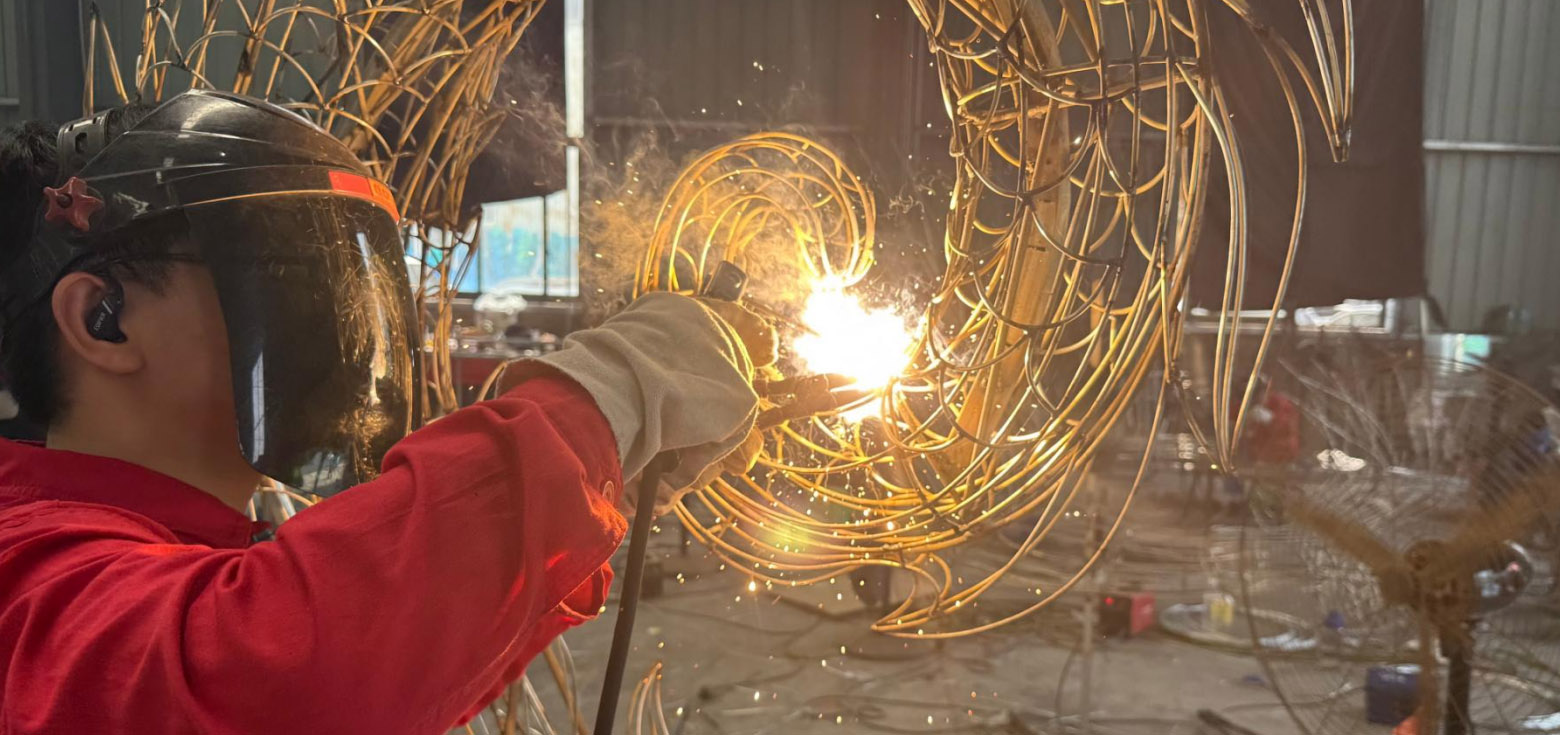
High-Density Wire Framing
To prevent fabric sagging and angular, polygonal distortion, we enforce strict limits on the maximum distance between exterior welding points. This high-density grid guarantees smooth, continuous organic curves that perfectly mirror your original design.
Frequently Asked Questions
Have more questions? Feel free to contact us.
1.Do you require us to have full 3D models of our IP before manufacturing?
We highly recommend providing full 3D models to ensure absolute design alignment and prevent any production discrepancies. However, if you only have 2D assets, our engineering team is highly experienced in extrapolating accurate 3D structures from standard 2D character sheets, vector graphics, and front/side/back profile drawings. All 3D adaptations will be sent for your final approval before any physical welding begins.
2.Can we request modifications during the 3D modeling and floor lofting phase?
Yes. We consider Phase 1 and Phase 2 collaborative. We will not proceed to physical welding until your team signs off on the structural renders and dimensions, ensuring the final output matches your vision perfectly.
3.Will the detailed galvanized iron wire frame rust in outdoor environments?
The galvanized coating naturally resists corrosion. Furthermore, the exterior synthetic silk cladding, combined with our internal anti-rust treatments for all welded steel joints, provides robust protection against moisture and environmental wear.
Secure Your Brand's Visual Integrity
Do not entrust your complex designs to manufacturers reliant on off-the-shelf modifications. Partner with a facility dedicated entirely to uncompromising custom engineering. Submit your high-resolution artwork, CAD files, or brand guidelines today, and let our engineering team draft a physically accurate proposal.